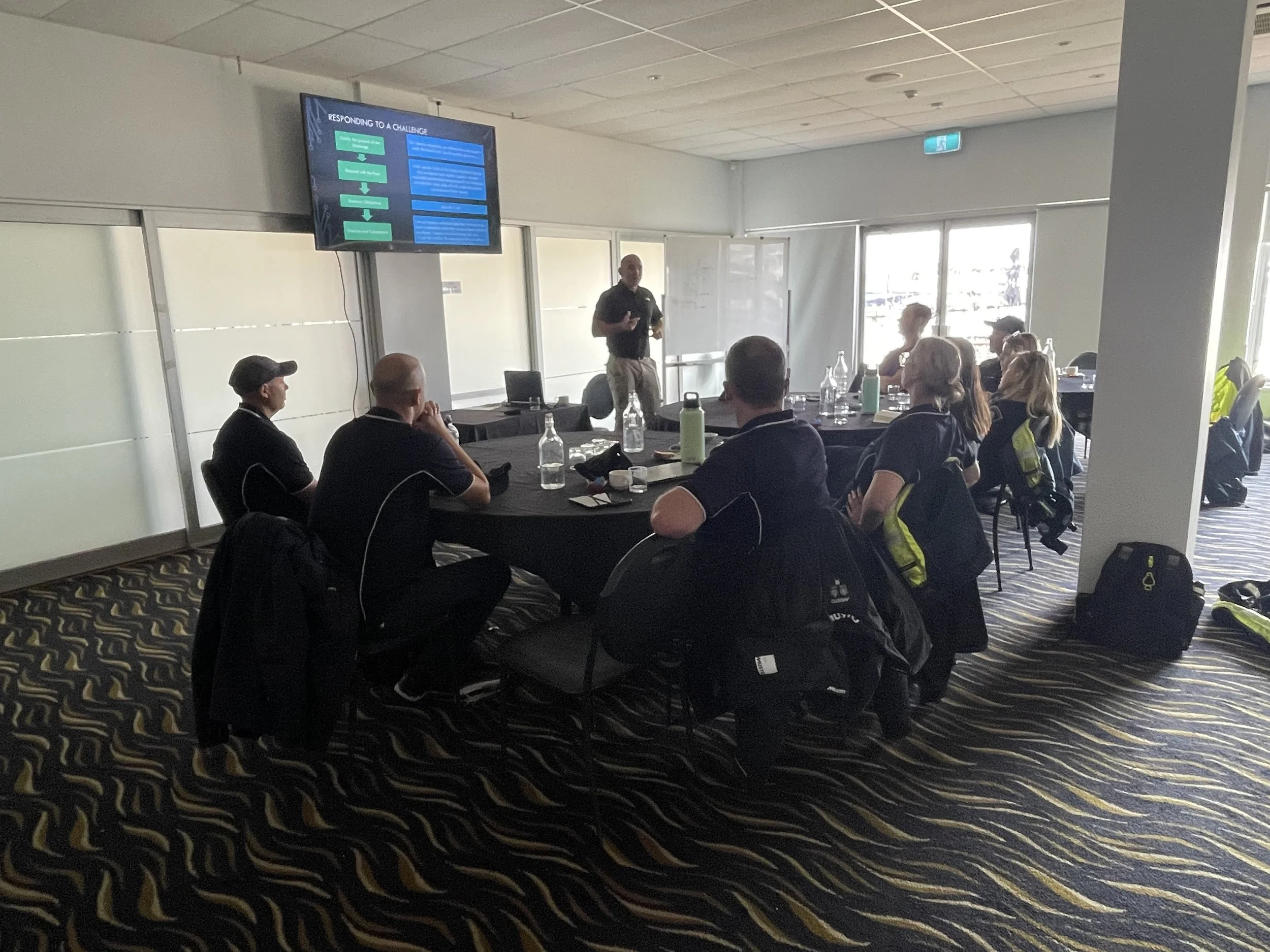
Regulatory Officer Strategic Safety and Situational Awareness
Regulatory Officer Strategic Safety and Situational Awareness
Focusing on personal safety and team effectiveness, this course is designed to address the unique challenges faced by regulatory compliance officers who bear law enforcement responsibilities outside the conventional arrest and detainment framework of policing.
Considering the intricate operational environments wherein public regulatory enforcement officers operate, often constrained by limited statutory powers to perform their duties, this course is crafted to arm participants with practical principles and actionable skills to bolster personal safety and that of their teams.
Employing a blend of guided learning and controlled practical scenarios, the course places paramount emphasis on cue identification and the judicious selection of responses.

“the best course I have seen in 30 years working in government regulatory enforcement”
Course Summary
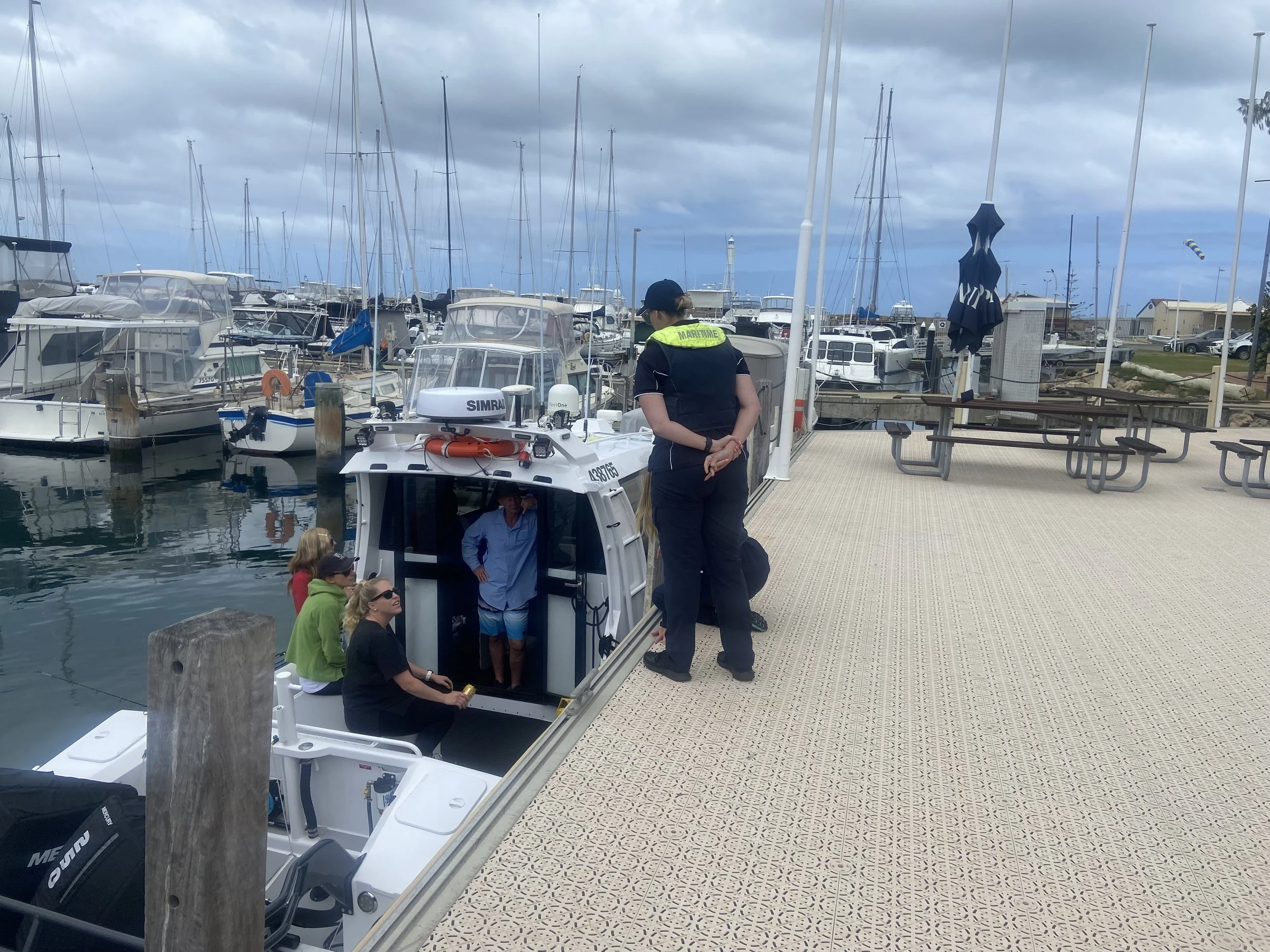
Regulatory Officer – Strategic Safety and Situational Awareness Course
This course is designed to address the unique challenges faced by regulatory compliance officers who bear law enforcement responsibilities outside the conventional arrest and detainment framework of policing. Considering the intricate operational environments wherein public regulatory enforcement officers operate, often constrained by limited statutory powers to perform their duties, this course is crafted to arm participants with practical principles and actionable skills to bolster personal safety and that of their teams.
Employing a blend of guided learning and controlled practical scenarios, the course places paramount emphasis on cue identification and the judicious selection of responses.
Catering for the nuanced nature of challenging encounters, the course acknowledges that not all adversities evolve into direct threats. Accordingly, an array of tools is imparted to facilitate officers in discerning between challenging situations and those that pose genuine risks of harm.
Course Modules and Key Learning Areas:
1. Professionalism
The Mindset of Operational Enhancement: Develop a resilient mindset focused on operational excellence.
Turning Principles into Action: Learn how to translate professional standards and principles into decisive actions, even under duress.
Keeping Composure: Discover techniques for maintaining self-control and professionalism in high-pressure situations.
The Importance of Preparation: Understand the critical role of preparation in anticipating challenges and managing hostile encounters.
2. Situational Awareness
The Theory of Situational Awareness: Explore the concept and its application to safety and operational performance.
Components of Situational Awareness in an Operational Role: Learn to identify and evaluate situational cues to better understand the environment.
Responding to Situational Cues and Indicators: Gain the skills to make effective decisions by recognising and connecting early warning cues.
Good Decisions Early: Emphasise the importance of timely decisions in preventing escalation.
Team Awareness: Understand how to develop your team’s situational awareness to enhance collective safety.
Experience and Bias: Discuss how personal experience and bias influence situational awareness and decision-making.
Self-Awareness in a Conflict Situation: Develop self-awareness to recognise your own responses and adjust as necessary to maintain control.
3. Difficult People and Groups
Personality Types and Aggression: Learn to identify different personality types and how they manifest under stress.
Self-Management Under Duress and Emotional Reset: Techniques for controlling emotional responses and resetting under pressure.
Transitional Language Skills: Use language strategically to de-escalate potential conflicts.
The Importance of an Introduction: Master the skill of setting the tone early with clear, confident communication.
Pre-emptive De-escalation: Apply techniques to defuse tension before it escalates.
Bias as a Tool: Utilise social bias strategically to influence outcomes.
Managing a Non-Cooperative Group: Strategies for maintaining control and compliance in group settings.
4. When Faced with a Challenge
Identifying a Challenge: Recognise the nature and level of challenges encountered in operational settings.
Applying Statutory Powers: Learn how and when to apply statutory powers effectively to give the best opportunity for successful prosecution outcomes.
Directions and Consequences: Communicate directions clearly and assertively, and outline consequences appropriately.
Avoiding Arguments: Techniques for avoiding verbal traps and unnecessary confrontations.
The Dangers of Defending Your Ego: Understand how ego can escalate situations and how to remain objective and professional.
5. Responding to a Threat
Cues of Threat Escalation: Recognise the subtle and overt cues indicating a situation may become violent.
Rewards and Risks of De-escalation: Evaluate when de-escalation is appropriate and when it may not be effective.
Distance and Positioning: Use spatial awareness to maintain safety and control.
Team Coordination: Enhance team communication and coordination for effective threat management.
Thresholds - Personal/Team: Define and understand personal and team risk thresholds.
Fight or Flight: Learn to recognise and manage physiological responses to threats.
Play the Long Game: Develop strategies for managing threats with patience and long-term outcomes in mind.
6. Physical Threat and Tactical Egress
Why All Your Previous Decisions Matter Now: Understand how earlier decisions shape the outcome of violent confrontations.
Cues of an Unmanageable Situation: Identify when a situation is no longer manageable and requires tactical withdrawal.
Team Communication Under Duress: Techniques for maintaining clear communication in high-stress situations.
The Defence of Self-Defence: Learn the legal and practical aspects of defending oneself within operational boundaries.
Break Away Drills: Practice drills to disengage and create distance from a threat.
Call to Egress: Learn to make the decision to disengage and egress safely.
When the Plan Fails - Regroup: Strategies for regrouping and reassessing when initial plans fall through.
7. Post-Incident Protocols
What Now? Immediate Stages After a Critical Incident: Steps to take immediately following a critical incident.
Emergency Response Communications Plan: Develop and implement an effective communication plan for emergencies.
The Other Risks: Understand the secondary risks that can arise post-incident.
Your Reactions Are Normal: Address and normalise psychological responses to stressful or traumatic events.
CompSafe Training
Our Mission
Our mission is to deliver specialized training programs that are meticulously tailored to the specific operational contexts of our clients, ensuring that every course we offer is directly applicable, relevant, and immediately beneficial to the participants' day-to-day duties.
What We Offer
Compsafe Training provides a range of programs developed by experts with extensive experience over a broad range of sectors including policing, military, close personal protection, security, and regulatory enforcement.
Our Approach
Our approach to training is proactive and holistic, focusing equally on threat prevention and effective response strategies. We emphasise enhancing both individual and team capabilities, promoting functional team awareness that is essential for operational success.